Farm crews need one toilet within a quarter mile of hand-labor work, per OSHA 1928.110, refreshed on the standard weekly cycle unless crew size pushes it higher. A single standard unit at a Providence farm or orchard covers small crews; bigger harvest seasons need two or three spread across fields.
OSHA 1928.110 sets the baseline for agriculture: potable water, toilets, and handwashing within a quarter mile walk of hand-labor employees, at a rate of one facility per 20 workers. That is separate from OSHA 1926.51(c), which governs construction crews and uses a different ratio starting at one toilet for 20 workers or fewer. A farm running a 15-person harvest crew needs at least one standard porta potty rental placed near the field, not back at the barn. Spread across multiple fields, that number climbs fast, and how many porta potties do i need walks through the math by crew size and field layout.
Seasonal work in and around Providence often means moving units as the harvest moves. A grower picking berries in one section this week and root vegetables in another next month can call for a mid-season relocation rather than committing to one fixed spot. Portable toilet rental service can include that kind of repositioning, and an emergency porta potty rental covers the gap when a harvest window opens faster than expected. Handwashing is a separate requirement under 1928.110, distinct from the toilet count, so a handwashing station rental or a simple portable sink rental rounds out the setup. Farms running produce stands or agritourism can also look at farm and agricultural restrooms sized for public visitors rather than just crew.
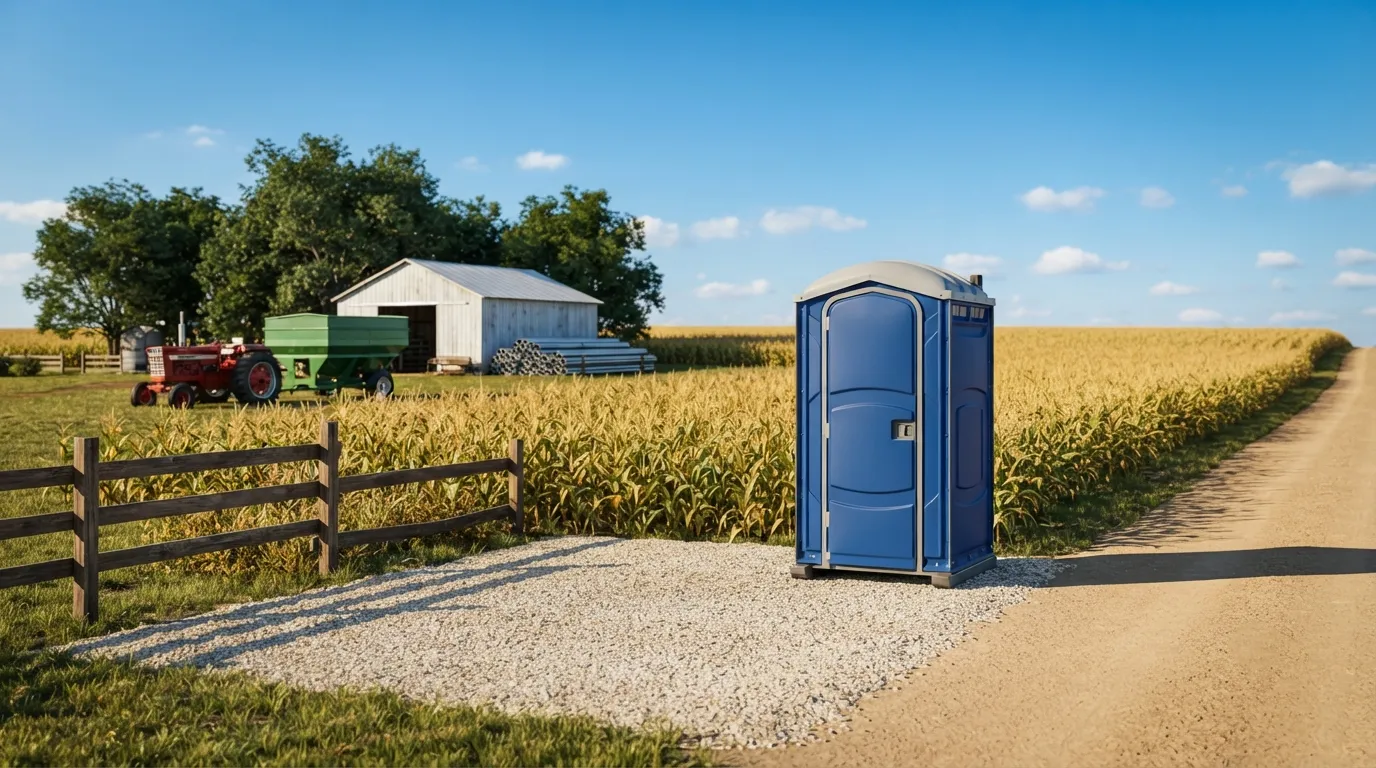
Farm rentals usually run on a monthly basis since the need often spans a full growing season. A standard unit rents for 125 to 325 dollars a month, and weekly terms run higher per week than the monthly rate per month, which is normal for shorter commitments.
| unit | day | week | month |
|---|---|---|---|
| standard | 100 to 350 | 130 to 500 | 125 to 325 |
| ada | 200 to 400 | 120 to 240 | - |
An ADA accessible porta potty matters for any farm stand, u-pick event, or agritourism draw that brings in the public, not just the crew. ADA Standards section 213.2 requires at least one accessible unit in any cluster, even a small one. Pricing detail for longer stays lives on monthly porta potty rental, and a full day-rate breakdown sits on porta potty rental per day. For growers weighing the full cost picture against water access, septic, and delivery fees together, porta potty rental cost covers the wider math. Most Providence farms land closer to the monthly column than the day rate once the season is locked in.
Yes, if there is a farmhouse, packing shed, or employee break area tied to a fixed system rather than portable units. A residential septic tank is typically pumped every 3 to 5 years, based on tank size and household or crew size, and skipping that schedule is how backups start during peak season. Septic pumping service covers routine visits, and how often to pump a septic tank explains the size and usage factors that shift the interval. A farm running a commercial kitchen or produce processing line should also watch for grease buildup: a grease interceptor gets pumped once fats, oils, grease and solids reach 25 percent of the liquid depth, and grease trap pumping handles that separately from tank pumping.
Farms near Providence sometimes need backup capacity during a busy weekend market or festival draw. A holding tank rental adds capacity without touching the buried system, and emergency septic service covers the call when a tank backs up mid-season. Warning signs worth knowing before they become a shutdown are listed on septic tank warning signs. Farms outside Providence proper, including growers near North Providence 4.2 miles northwest or Johnston 7.7 miles west, still fall inside typical service range for both portable units and septic trucks.
Providence-area growers running larger operations sometimes add a restroom trailer rental for farm stand events or agritourism weekends, since a trailer handles higher foot traffic better than a cluster of standard units. A 2 stall restroom trailer fits a modest produce stand; bigger fall festivals lean toward a 4 stall restroom trailer. Whatever the setup, Providence Porta Pros delivers and services farm accounts on the same routes used for construction and event work.
OSHA 1928.110 sets a quarter mile walk as the maximum distance from hand-labor work to the nearest toilet and handwashing station. That is a walking distance, not a driving distance, so field layout matters more than road access when placing units.
It depends on crew size. OSHA 1928.110 calls for one facility per 20 workers, so a 20-person crew can run on one unit while a 45-person crew needs three spread across the work area.
Yes. OSHA 1928.110 requires potable water and handwashing facilities for hand-labor employees, separate from the toilet count itself. A handwashing station rental or portable sink satisfies that requirement alongside the toilet units.
Weekly service is the standard baseline for units used by up to 10 people over a 40 hour week. Bigger crews or public-facing farm stands often need twice-weekly visits, especially during peak harvest.
Yes. Septic pumping empties a buried tank tied to a building, while porta potty service refreshes portable units in the field. Farms with both a farmhouse and field crews typically need septic tank cleaning and portable toilet service on separate schedules.
Yes. Providence Porta Pros delivers farm and agricultural restrooms across Providence and the surrounding metro, with same-day and next-day drop-off available on most orders.
Pricing depends on the unit and how long you need it. See our cost breakdown and request a free quote for an exact figure.
Standard rentals include scheduled service — a pump-out, a clean, a restock and fresh deodorizer. Busy or hot-weather sites can be serviced more often.
Call now or request a free quote — clean units, on-time delivery, transparent pricing.